
Strengthening Protected Areas, Spatial Planning, and Biodiversity Finance in Rwanda
Rwanda is advancing its biodiversity and protected-area agenda through integrated spatial mapping, legal reforms, and innovative financing mechanisms. Led by the Rwanda Environment Management Authority in collaboration with national partners, the country is improving the identification of key ecosystems and priority habitats. The Rwanda Green Fund (FONERWA), one of Africa’s leading environment and climate finance vehicles, continues to mobilize resources for nature-based solutions. These efforts support Vision 2050 and strengthen the effectiveness and expansion of protected and conserved areas.
Mapping, Governance, and Biodiversity Finance
Rwanda’s biodiversity strategy integrates spatial mapping, institutional and legal reforms, and innovative financing to advance conservation and sustainable development goals. On the spatial side, national mapping tools support land-use planning, ecosystem valuation, and protected-area planning. The national geospatial portal, managed by the Rwanda Land Management and Use Authority with data contributions from the Rwanda Environment Management Authority and other partners, provides updated layers on ecosystems, protected areas, and natural resources. Analyses such as the 2021 assessment of biodiversity hubs and ecosystem services continue to identify priority habitats and areas of ecological importance for future conservation measures.
Institutionally and legally, Rwanda has strengthened its frameworks for biodiversity management. Under Law No. 48/2018, biodiversity considerations are integrated into the environmental impact assessment system, with updated EIA guidelines issued in 2021. Biodiversity mainstreaming is expanding through Strategic Environmental Assessment and catchment management planning. Digital environmental compliance platforms developed by the Rwanda Environment Management Authority have improved monitoring and fine collection, with part of the revenue reinvested into restoration activities. On the financing front, the Rwanda Green Fund (FONERWA) remains a central mechanism for climate and environment investments. As of 2023, the fund has mobilized approximately USD 274 million and supported projects across biodiversity, climate resilience, and green growth. Updated national planning processes, including BIOFIN assessments and the NBSAP revision, identify a biodiversity financing need of approximately USD 500 million by 2025. FONERWA is also developing results-based financing, blended finance solutions, and payments for ecosystem services models that can support Target 3 implementation.
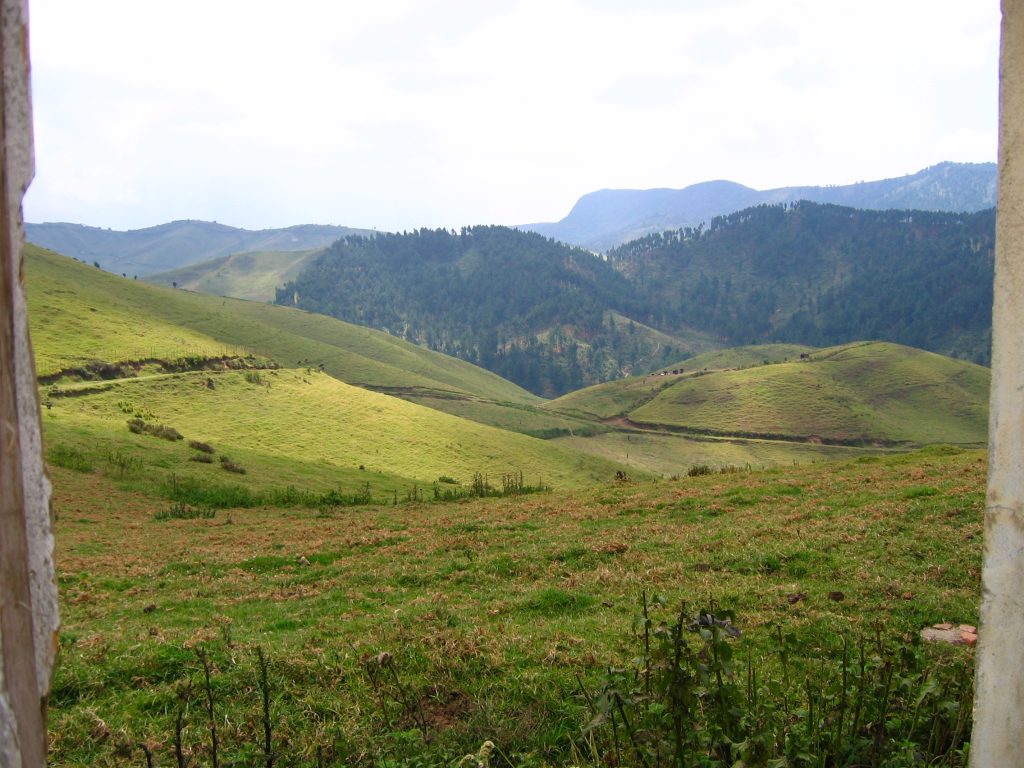
Rwanda’s approach to protected and conserved areas incorporates buffer zones, Other Effective area-based Conservation Measures, and Forest Landscape Restoration principles. Recent progress includes the consolidation of Gishwati-Mukura National Park, expansion and restoration efforts around Volcanoes National Park and its buffer zones, and the rehabilitation of major wetlands in Kigali and secondary cities, all linked with community benefit programs.
Outcomes and Lessons
Rwanda’s experience demonstrates how a densely populated country can advance biodiversity goals through coordinated spatial planning, strengthened institutions, and diversified finance. Updated ecosystem maps support the identification of priority habitats, including areas that may qualify as OECMs. Enhanced EIA and SEA systems improve environmental safeguards and guide sustainable development. FONERWA shows how domestic and blended finance can scale nature-based solutions and reduce reliance on external funding. Key lessons include linking conservation with community benefits through tourism revenue sharing and livelihood programs, using digital tools to increase transparency, piloting PES and restoration initiatives, and aligning biodiversity finance with national climate and development strategies. Rwanda’s model highlights the importance of sustained financing, clear institutional coordination, and integrated planning to advance Target 3.