
Australia – Progress Towards 30×30
Australia has set a goal of protecting and conserving 30% of Australia’s landmass and 30% of Australia’s marine areas by 2030. Australia aims to achieve this through building on existing initiatives, funding new initiatives, and strengthening cross-sectoral collaboration.
Conservation Gains in Australia
Over 191 million hectares, or 24.92%, of Australia’s land is currently protected. 21 million hectares of this has been protected since the government set its 30% goal in 2022. Achieving the 30% land target will require an additional 39 million hectares of protected or conserved land.
Efforts towards 30 by 30 are being guided by the National Roadmap for Protecting and Conserving 30% of Australia’s Land by 2030. The Australian Government is focused on supporting the expansion of public and private protected areas, building its Conserved Areas Network and supporting First Nations Peoples to care for Country.
Australia has agreed a national framework to recognise Other Effective area-based Conservation Measures (OECMs) or ‘conserved areas’, with the first conserved area recognised in 2025. A voluntary “Nature Repair Market” has been established to mobilise private investment in restoration and biodiversity protection.
To help Australia meet its 30×30 target on land, the government has allocated $250 million under the Australian Bushland Program to boost conservation and protect more land. The Australian Bushland Program includes partnerships with state and territory governments, expanding the Indigenous Protected Areas (IPA) program, investing in Nature Repair Market projects and contributing funds to support purchases and protection of properties with high biodiversity value.
A cornerstone of Australia’s contribution to the 30×30 target is the Australian Government’s IPA Program, which is managed by First Nations people to protect and conserve biodiversity and cultural values of land and sea Country in line with Traditional Owner objectives. The IPA estate currently represents over 54% of Australia’s National Reserve System and safeguards approximately 108 million hectares of land and 6 million hectares of sea. The Australian Government has committed $231.5 million until 2028 to establish 10 new IPAs and strengthen ongoing management. Under the Australian Bushland Program, funding will support at least another 8 new IPA projects.
On the marine front, 52% of Australia’s ocean is already protected within marine protected areas, with 24% designated as “no-take” zones.
Recent highlights include the expansion of two large marine protected areas that deliver significant conservation outcomes for the sub-Antarctic marine environment.
In 2023, Macquarie Island Marine Park was almost tripled in size to around 475,000 km2. Ninety-three per cent or 385,000 km2 of the park – an area larger than Germany – is completely closed to fishing, mining and other extractive activities.
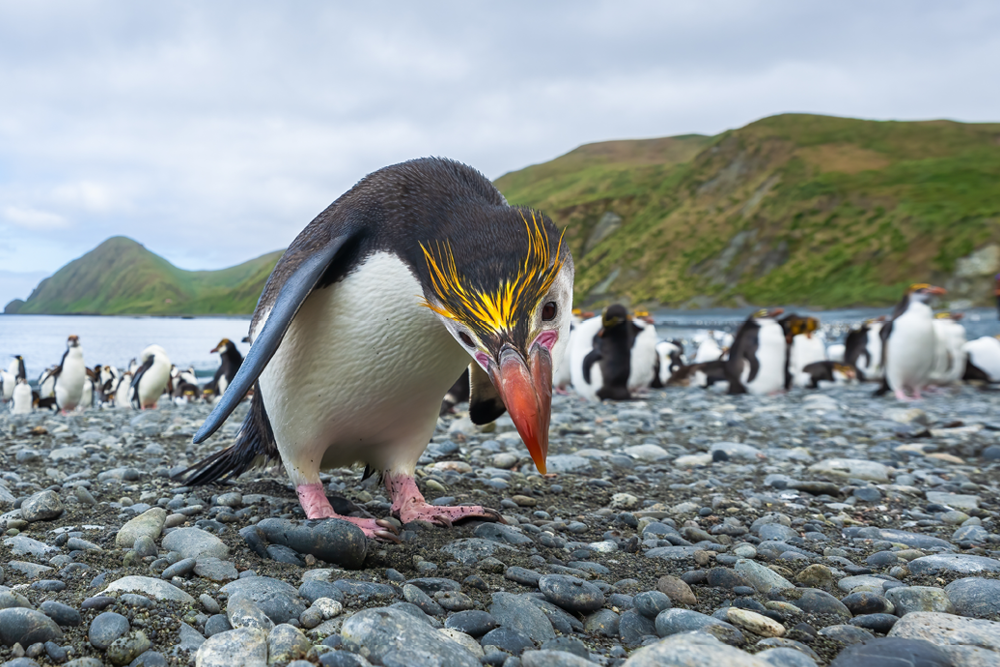
In January 2025, the Heard Island and McDonald Islands Marine Reserve was quadrupled in size to around 379,000 km2 to afford greater protection to this unique and globally significant sub-Antarctic region, while enabling the continuation of a well-regulated and sustainable fishery.
These protections are complemented by strengthened marine protection in the South-east Marine Parks Network, which added 70,000 km² of high-protection zones across 10 parks, and plans for Christmas Island and Cocos (Keeling) Islands Marine Parks being finalised, safeguarding 744,070 km² of ocean with over 98% of these areas under no-take protection.
In June 2025, at the United Nations Oceans Conference, Australia’s Minister for the Environment and Water, Senator the Hon Murray Watt, committed to protect 30% of Australia’s ocean in highly protected zones by 2030. A review of five management plans covering 44 Australian Marine Parks has now commenced in advance of their expiry in June 2028. This review is the primary opportunity to help achieve the 30% high protection marine target.
Outcomes and Lessons
Australia’s 30×30 process demonstrates how ambitious biodiversity goals can be advanced through multi-actor collaboration and inclusive governance. Early outcomes include improved intergovernmental coordination and dedicated funding to support progress towards 30×30 including expanded funding, and new policy tools to mobilise private sector engagement. Australia’s experience underscores that achieving 30×30 requires aligning science, policy, and financing mechanisms while ensuring that Indigenous and local communities remain central to implementation.