
Advancing Area-Based Conservation through National Targets and Partnerships
Canada’s approach to area-based conservation builds on its 2020 Biodiversity Goals and Targets and the Pathway to Canada Target 1 initiative. Supported by significant public investment and multi-level partnerships, the country has increased its terrestrial and marine protected and conserved areas by 76 percent since 2015. As of 2025, 12.92 percent of terrestrial and 9.18 percent of marine areas are protected or conserved under federal, provincial, territorial, and Indigenous-led mechanisms.
Advancing Area-Based Conservation
Canada adopted its 2020 Biodiversity Goals and Targets in 2015, aligned with the Aichi Biodiversity Targets. Target 1 aimed to increase area-based conservation through both protected areas and Other Effective area-based Conservation Measures (OECMs). In 2015, Canada’s protected coverage stood at 10.5 percent of terrestrial and freshwater areas and 0.9 percent of marine and coastal areas. By 2021, these figures had increased to 13.5 percent and 13.9 percent, respectively.
To accelerate progress, the government launched the Pathway to Canada Target 1 initiative in 2016, designed to strengthen collaboration among Indigenous governments and organizations, non-governmental organizations, industry, youth, and all levels of government. This process produced two key reports: We Rise Together (Indigenous Circle of Experts) and Canada’s Conservation Vision (National Advisory Panel). These were later consolidated into One with Nature, which outlined four priorities: expanding protected areas, recognizing Indigenous rights and priorities, maximizing conservation outcomes, and strengthening public participation.
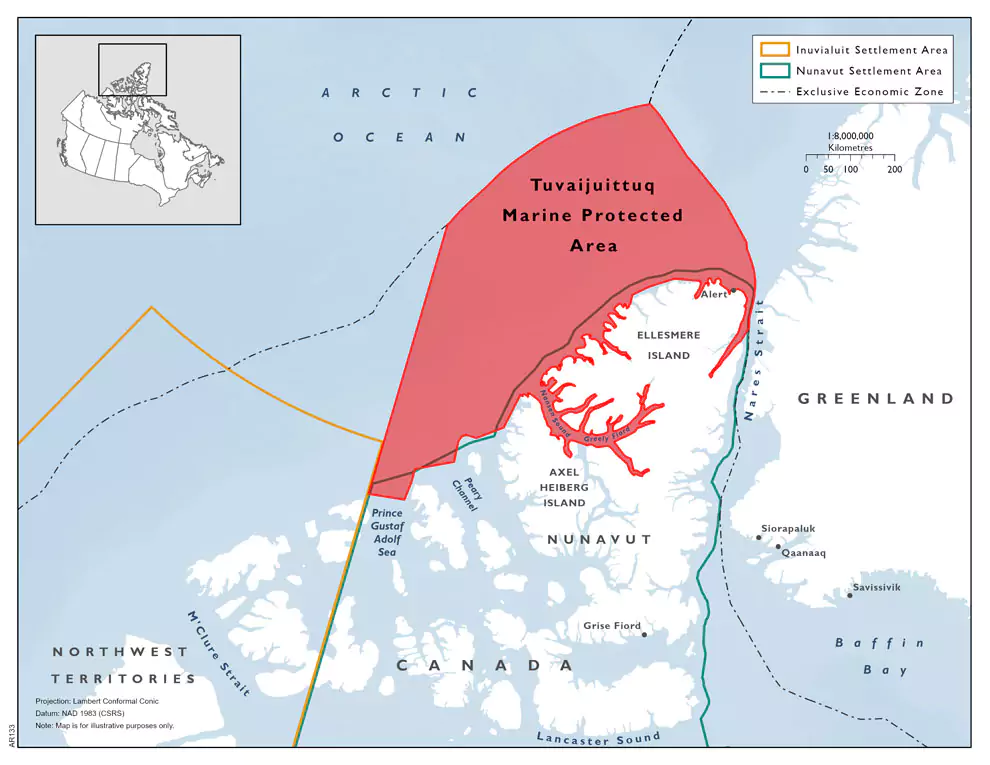
The initiative resulted in national guidance for Indigenous Protected and Conserved Areas (IPCAs) and OECMs, harmonized definitions across jurisdictions, and new technical tools such as a national decision-support system to inform conservation planning. Concrete achievements include the designation of Thaidene Nëné Indigenous Protected Area, Edéhzhíe National Wildlife Area, and the Tuvaijuittuq Marine Protected Area. As of 2021, Canada had identified more than 170 terrestrial and 35 marine OECMs, covering approximately 365,000 square kilometers.
Outcomes and Lessons
Canada’s experience illustrates the role of clear national targets, sustained funding, and collaborative governance in achieving conservation outcomes. Establishing standards for OECMs and IPCAs has supported consistent reporting and recognition of Indigenous-led and multi-jurisdictional conservation efforts. The integration of area-based conservation with climate and nature-based solutions has been reinforced through the Enhanced Nature Legacy, a CAD 4.1 billion investment supporting implementation toward the 25 percent by 2025 and 30 percent by 2030 goals. Lessons emphasize the importance of measurable targets in driving coordination, the central role of Indigenous participation in governance, and the need for ongoing efforts to improve ecological representativeness and connectivity across Canada’s conservation network.